
In the world of investing, the terms “bull” and “bear” describe broad market conditions—indicating whether stock markets are growing (bullish) or declining (bearish) in value. Because market trends directly impact your portfolio, understanding these cycles is critical for every long-term investor.
Note: Historical analyses of bull and bear markets commonly reference the U.S. markets due to their extensive, long-term multi-decade data sets.
What is a Bull Market?
A bull market is characterized by rising stock prices and an optimistic economic outlook. Generally, a bull market is defined by a 20% or greater increase in a broad market index over a sustained period of at least two months. Driven by economic expansion and corporate strength, investors feel confident and tend to increase their market exposure to capture growing equity prices.
What is a Bear Market?
A bear market occurs when stock prices fall by 20% or more over a two-month period, accompanied by negative market sentiment and general pessimism. These downturns are often triggered by economic recessions, asset bubbles bursting, or geopolitical shocks.
While panic can lead investors to sell off assets prematurely, patient investors often view bear markets as an opportunity to acquire quality stocks at attractive, discounted prices—ultimately laying the groundwork for the next bull market recovery.
History of Bull and Bear Markets Since 1926
Based on long-term historical data analyzed by First Trust Portfolios:
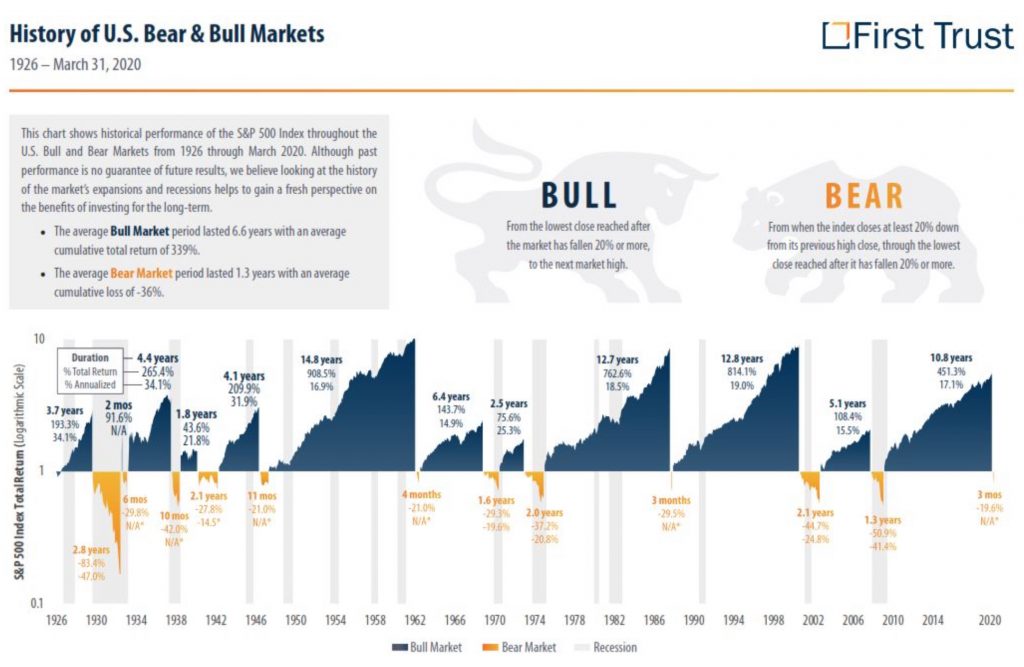
- Average Bull Market Duration: Lasted 9.1 years with an average cumulative return of 476%.
- Average Bear Market Duration: Lasted 1.4 years with an average cumulative loss of -41%.
💡 The Historical Reality: Bull markets consistently outlast bear markets by a wide margin. Over the past century, the market has trended steadily upward, proving that pulling money out during a temporary downturn risks missing out on future long-term growth.
What Smart Investors Do
Navigating market volatility successfully relies on proven strategies:
- Have Clear Goals: Whether you are building a retirement nest egg or funding your children’s education, keeping your eyes on long-term milestones prevents emotional panic during dips.
- Embrace Diversification: Allocate across defensive sectors that remain essential regardless of economic conditions—such as healthcare, utilities, and essential commodities.
- Stay Invested (Dollar-Cost Averaging): Contributing a fixed amount regularly via automated savings ensures you buy fewer units when prices are high and more units when the market dips.
- Exercise Patience: Avoid emotional extremes. Temporary declines are normal; staying invested ensures you participate fully in the eventual market rebound.
- Trust That Time is on Your Side: History repeatedly demonstrates that markets recover and grow because bull markets outlast bear markets.
Securing Your Financial Future
Market fluctuations are a constant, but staying consistent with a disciplined strategy is the key to building lasting wealth. Working with a professional advisor helps keep emotions in check and ensures your financial plan aligns with your long-term goals.
Ready to formulate an investment and protection strategy tailored to your goals? Connect with a licensed financial planner or life planner today for a personalized consultation.